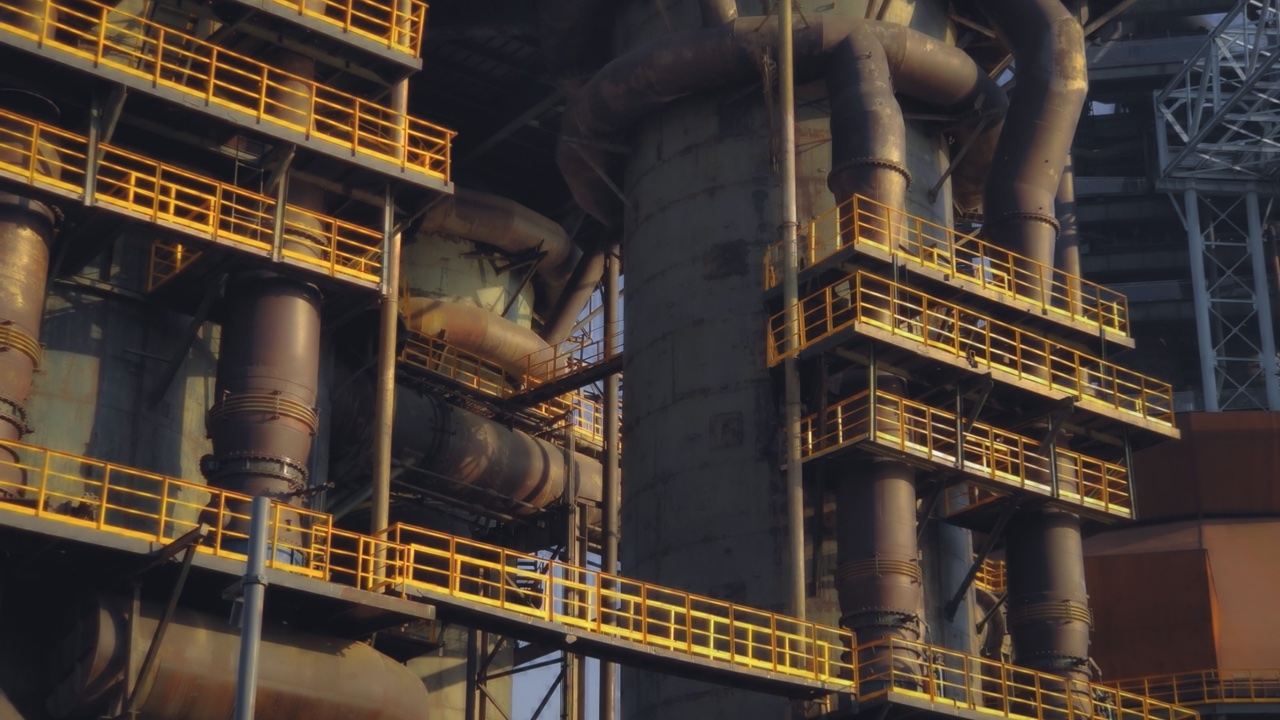
Large industrial facilities — processing plants, manufacturing complexes, large commercial developments — rarely have a single uniform pipe specification throughout. Pressure zones differ across the system, fluid temperatures vary by service, and some areas have regulatory requirements that others don’t. A piping specification that applies a single schedule across the entire facility leaves money on the table in low-pressure zones and may create compliance issues in high-pressure zones.
The more practical approach is zone-by-zone schedule selection, with Schedule 20 steel pipe sizes and heavier schedules each used where they’re appropriate. The challenge is building the decision framework so that the selection is defensible, consistent, and actually gets implemented rather than defaulting to a single schedule through the procurement process.
Defining the pressure zones before selecting schedules
The starting point is a system pressure map — identifying the operating pressure range in each area of the facility and the corresponding design pressure after accounting for appropriate margins. This is typically derived from the process and instrumentation diagram (P&ID), with design pressure set at the higher of 110% of maximum operating pressure or the pressure relief device set pressure, whichever is more conservative.
Zones where design pressure is below roughly 200 psi (for larger nominal sizes) are where Schedule 20 becomes competitive with Schedule 40. Zones with higher design pressures, or where surge analysis indicates significant transient overpressure, typically require heavier schedules.
For a large HVAC system in a commercial building, this often translates to:
Primary chilled water loop at moderate pressure (typically 100–150 psi range) in larger pipe sizes: Schedule 20 is likely adequate and represents meaningful material savings at NPS 6 and above.
High-rise domestic water risers with elevated static pressure from building height: the static pressure alone may push design pressure into Schedule 40 territory regardless of system pressure at the pump.
Low-pressure condenser water return: a strong candidate for Schedule 20 in larger sizes.
Temperature as a secondary criterion
Pipe schedule tables and pressure rating calculations assume a reference temperature, typically around 100°F for moderate-temperature systems. At elevated temperatures, the allowable stress for carbon steel decreases, which reduces the allowable pressure for a given wall thickness. Schedule 20’s already-thinner wall leaves less capacity to absorb the reduction.
For steam systems, hot oil, and other elevated-temperature services, the temperature derating factor becomes relevant at temperatures above roughly 400°F for carbon steel. Systems running below 200°F are typically unaffected by temperature derating. For facilities with both ambient-temperature and elevated-temperature services, the temperature criterion identifies piping that needs to be evaluated separately rather than simply inheriting the zone’s pressure-based schedule selection.
Regulatory and code requirements that override engineering selection
Some portions of an industrial facility are subject to codes that specify minimum pipe schedules or prohibit certain schedules regardless of pressure calculations. Notable examples:
ASME B31.3 high-pressure piping systems (Category M fluid service): may require additional scrutiny and higher safety factors that effectively require heavier schedules.
Fire protection systems under NFPA 13: Schedule 20 is explicitly permitted for wet pipe systems at pressures up to 300 psi for pipe sizes 3 inches and above. Dry pipe systems have different requirements. The applicable NFPA edition and having insurance underwriter approval both affect what’s acceptable.
Local authority requirements: some jurisdictions have adopted amendments to model codes that restrict Schedule 20 in specific applications. Checking with the local authority having jurisdiction (AHJ) before finalizing a mixed-schedule specification avoids late-stage substitutions.
Wherever a code or regulatory requirement sets a minimum schedule, that requirement supersedes the engineering calculation. The zone framework should incorporate regulatory requirements as a filter applied before or alongside the pressure calculation, not after.
Managing procurement and installation complexity
A mixed-schedule specification creates procurement and field management challenges that a single-schedule specification avoids. These are real costs that should be weighed against the material savings.
Procurement: ordering multiple schedules of the same nominal pipe size from a single supplier is straightforward. Managing different vendors for different zones, or tracking multiple line items in the specification, adds administrative overhead.
Storage and staging: Schedule 20 and Schedule 40 pipe in the same nominal size looks identical from a distance. Yard storage and staging areas need to be organized to prevent mixing, and physical marking of schedule on each length (beyond the standard mill markings) is helpful. Field errors where the wrong schedule gets installed in a zone are difficult to detect without explicit verification.
Documentation: the zone-by-zone schedule selection needs to be clearly reflected on the piping isometrics and in the bill of materials. If the specification defines a default schedule with documented exceptions for specific zones, the exceptions need to be traceable from the specification to the isometrics to the purchase orders to the material tracking records.
Where the savings typically justify the complexity
The cost differential between Schedule 20 and Schedule 40 steel pipe is a function of the wall thickness difference, which grows in absolute terms as nominal pipe size increases. At NPS 4 and below, the wall thickness difference between schedules is small and the savings per foot are modest. At NPS 8, 10, and 12, the differential is substantial — the wall thickness difference between Schedule 20 and Schedule 40 is significant enough that the material cost savings per linear foot can justify the additional specification and procurement management.
For large projects with significant runs of NPS 6 and above in demonstrably low-pressure service, the total material savings from Schedule 20 in appropriate zones typically outweigh the overhead of managing a mixed specification. For smaller projects or projects without meaningful lengths of large-diameter low-pressure piping, a single-schedule approach may be simpler and only marginally more expensive.
The zone-by-zone framework isn’t a fixed rule — it’s a process for making the schedule selection systematically rather than by convention. Applying it on a project-by-project basis, with actual pressure zone mapping and explicit consideration of code requirements, produces specifications that are both appropriate for the service conditions and optimized for cost where the engineering supports it.